By: Emilia MacDonald
Edited By: Madeleine Hamilton
Following the election of Donald Trump in November of 2024, he has been quick to initiate orders that would consolidate his power and limit the potential of his critics and opponents. Since his presidency in 2016, the media has been one of Donald Trump’s biggest targets, claiming the information publicized by organizations such as NBC and The Guardian is false and a fear-mongering tactic from the political left to undermine his power. As of January 2025, Trump and his followers’ first moves against the media have included “investigating” the legitimacy of the news publications that have been loudly oppositional in their reporting on Trump and his policies and reshuffling the media rotation in the Defense Department. This assault on the media and the concept of freedom of speech should be raising the alarm bell for both American citizens and beyond. It is important to remember that though the United States is still a deeply liberal state, these actions are frighteningly reminiscent of historically authoritarian tactics, and this fact must not be quickly dismissed.
A archival example of this can be seen in Germany, when in 1933, Hitler became Chancellor after running with the support of the Nazi party and the support of much of the German population. Shortly after his election, he demolished the German multi-party democratic system that had previously been in place. His next action was to swiftly dismantle news and media outlets across the country, citing that these organizations were a source of support for the Communist beast, using this as the justification for his attacks on political opposition and journalists, leading to mass arrests and brutalizations. The next action in this chain of events was for the German Propaganda Ministry to seize control of the Reich Association of the German Press. This seizure of the Reich Association allowed the Propaganda Ministry to set guidelines for what could be said about the governance of Germany and its people, requiring editors to omit anything “calculated to weaken the strength of the Reich abroad or at home”. Any journalists or editors that failed to comply with these regulations were to be fired or sent to a concentration camp on the assumption of intent to harm the German nation. Granted, the censorship regime of censorship that was applied by Hitler at this time is an escalation of the actions currently being taken by Trump against his critics, it is not completely unrealistic that those who oppose Trump publicly and with a large media platform are at-risk of losing their careers, facing fines, and eventually facing jail time. These alarming threats could quickly become reality, as Trump has loudly threatened, in both the past and present, to revoke media licenses, to sue reporters, and has recently launched investigations into networks including NPR, PBS, and CBS.
Unfortunately, the attack of authoritarian regimes is not isolated to the Second World War. For the past several decades, journalists across Central and South America have faced constant threats of violence and death to journalists and their families. Furthermore, it has been noted that politicians in this region will manipulate the media to support their causes as exemplified by President Javier Milei in Argentina, a politician with libertarian tendencies, who used social media to create the persona of a sort of messiah to his younger audiences, and was able to unleash a barrage of fake news, which mirrors the online dedication of Trump fans across social media platform, and his creation of his own social media platform: Truth Social.
These tactics anti-media mentioned above hold alarming similarities to some of the moves currently being made by Donald Trump in only his first month of being in office. In the past few alarmingly short weeks, Trump has been blocking journalists from the Oval Office, he has also attempted to make an example of journalists from the Associated Press, who he blocked from reporting on White House events for two days, due to the AP continuing to refer to the body of water south of the United States as the Gulf of Mexico, rather than Trump’s preferred Gulf of America. To be clear, Trump has been perpetuating strong anti-media rhetoric since his first term in the Oval Office. Since then, it has become more and more clear that any who opposes him in the media are at risk of being viewed as the “enemy” by the national government, being consistently slandered as spreading false information, facing accusations of being paid off by the Left, as well as potentially facing numerous lawsuits. Trump isn’t just attacking the credibility of news outlets and radio shows across the U.S. – he’s actively undermining their ability to do their job. This is clear in the Department of Defense’s decision to reshuffle press spaces at the Pentagon replacing mainstream media spots with far-right networks such as One America News Network. OANN, notably, airs a show hosted by Trump groupie Matt Gaetz.
These aggressive actions being carried out by Trump and his administration against the media should be ringing the alarm bells for those aware that similar tactics are often employed by authoritarian regimes or politicians who have sought to limit the reach of the media, as evidenced throughout history. Though democracy in the United States has not yet fallen, it is certainly stumbling, and there must be a concentrated effort to protect the media around the world and a recognition that actions such as censoring the media may potentially be a first step towards an authoritarian takeover of a previously democratic system. Any attack on journalists and the free press is an attack on the national consciousness—and it must not be taken lightly.
References:
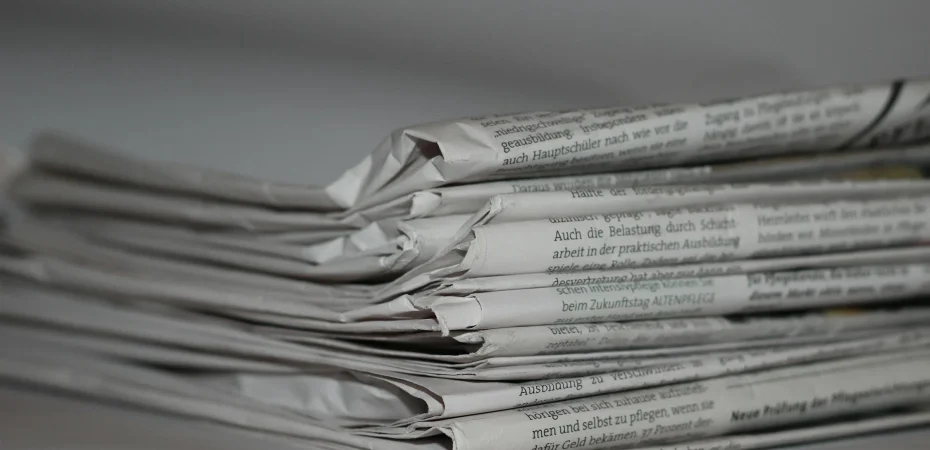
Image Source: Pixabay. (n.d). Folded Newspapers [Digital Image]. Pexels. https://www.pexels.com/photo/folded-newspapers-158651/
Behn, A. (2024). South America’s Authoritarian Turn. Rosa Luxemburg Stiftung. https://www.rosalux.de/en/news/id/52437/south-americas-authoritarian-turn
Hirschfeld, A. (2025). Trump accused of leading a ‘multi-pronged’ attack on US media. Al Jazeera. https://www.aljazeera.com/economy/2025/2/10/trump-accused-of-leading-a-multipronged-attack-on-us-media
Holocaust Encyclopedia. (n.d). The Press In The Third Reich. https://encyclopedia.ushmm.org/content/en/article/the-press-in-the-third-reich
Siemaszko, C. (2025). Trump’s anti-media rhetoric turns to action. NBC News. https://www.nbcnews.com/politics/donald-trump/trumps-anti-media-rhetoric-turns-action-rcna191949
Sosa, D. (2022). Understanding the Impact of Journalism Inside Authoritarian Regimes. Global Investigative Journalism Network. https://gijn.org/stories/understanding-the-impact-of-journalism-inside-authoritarian-regimes/