By: Maya Carretta
Edited by: Kelly-Dee Anderson
“Citizens cannot relate well to the complex world around them by factual knowledge and logic alone.”– Martha C. Nussbaum in Not For Profit: Why Democracy Needs the Humanities
With all that’s happening in the world today regarding politics and the news, it can be hard to navigate all the varying dialogues. Did a world leader really say that? Did this really happen? Is that photo real? With the growing discourse in the world around us, it becomes increasingly vital that citizens of modern, democratic societies are able to criticise and challenge the world around them. Thus, the critical thinking skills of citizens become imperative, not only in keeping members of society engaged, but also in keeping them correctly informed.
However, critical thinking skills are on a steady decline. In recent years, the education system has shifted to align with society’s current view that the study of the humanities no longer holds equal value to that of the sciences, medicine, and even business. Martha Nussbaum discusses this shift in her book Not For Profit: Why Democracy Needs the Humanities. Over the course of several chapters she outlines the crisis that all levels of education are facing: education for profit; essentially, “the humanities and the arts are being cut away, in both primary/secondary and college/university education, in virtually every nation of the world.” (Naussbaum, 2010, p. 2). She goes on to allude to the idea that policies adopted and created in democratic societies often view the humanities as frivolous—something that can be cut away from education in order for society to keep its competitive edge in the global market.
Limiting the educational scope based on how valuable a subject is to society limits the kinds of material and content that students are exposed to. Without the humanities, like English, philosophy, history, and fine arts, contemporary education systems stop students from developing the critical thinking skills that push them to challenge the status quo and produce change.
“History, I said, might be essential. But educators for economic growth will not want a study of history that focuses on injustices of class, caste, gender, and ethnoreligious membership, because this will prompt critical thinking about the present.” (Naussbaum, 2010, p. 21).
Critical thinking skills are continuing on a steady downfall, going underdeveloped, which can have drastic impacts on what future societies may look like. This neglect will prohibit citizens from being able to undertake the challenge of analyzing our various histories and the social implications of the past that are reflected in our systems and institutions today.
As our education systems change to fit the demands of broader societal wishes, we pay the price for it through educational cuts devaluing humanities. Nussbaum (2010) observes, “Meanwhile, the pressure for economic growth has led many political leaders in Europe to recast the entirety of university education—both teaching and research—along growth-oriented lines, asking about the contribution of each discipline and each researcher to the economy” (p. 127). Again, we’re faced with the erosion of the humanities, showcasing society’s tilt in thinking about the humanities as a discipline that is incapable of contributing to economic growth or the competitive edge it desires to maintain.
As mentioned, the humanities stress the importance of critical thinking skills and develop them through looking at diverse materials. Literature can give us significant insights, and details about the fears of the time periods they were written in, while political philosophy engages us in critical discussions that give us the ability “…to think well about political issues affecting the nation, the ability to have concern for the lives of others, the ability to imagine a wide variety of complex issues, the ability to judge political leaders critically, the ability to think about the good of the nation….” (Naussbaum, 2010, p. 25). Without adequate exposure to these kinds of discussions and materials, citizens of modern society are set up to be unable to question our governments, our policies, and even our values.
Without good critical thinking skills how will we be able to challenge the world around us? Distinguish a paternalistic policy from a policy that is actually to the benefit of the people? As our education systems continue to change and bend to what society, governments, and policy makers want, we open ourselves up to be even more vulnerable. Susceptible to unjust policies and unjust forms of society, cutting away the parts of our education that provide us with well-rounded views, and the tools to challenge the status quo will put a stop to social change. As Nussbaum points out, economic growth is not concerned with who it exploits or hurts—neither economic growth nor competitive edge are concerned with paternalism, censorship, or radical ideology—but if we can no longer critically assess, how will we be able to truly see the world around us?
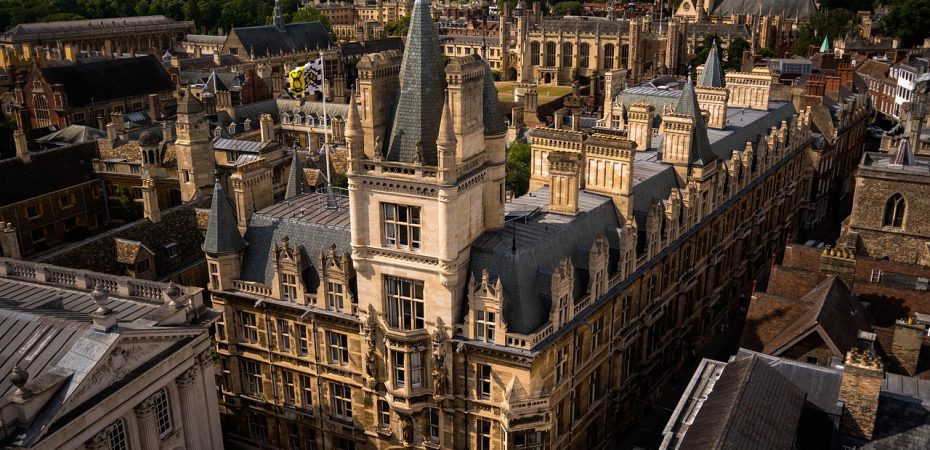
Image Citation: Okmarian. (2020, November 18). College Buildings University [Photograph]. Pixabay. https://pixabay.com/photos/college-buildings-university-school-5757815/
References:
Nussbaum, M. (2010). Not for Profit: Why Democracy Needs the Humanities. Princeton University Press. https://sixthform.painsley.co.uk/wp-content/uploads/2023/06/Drama-why-democracy-needs-the-humanities.pdf