
By: Mouctar Diallo
Edited By: Alicia Corner
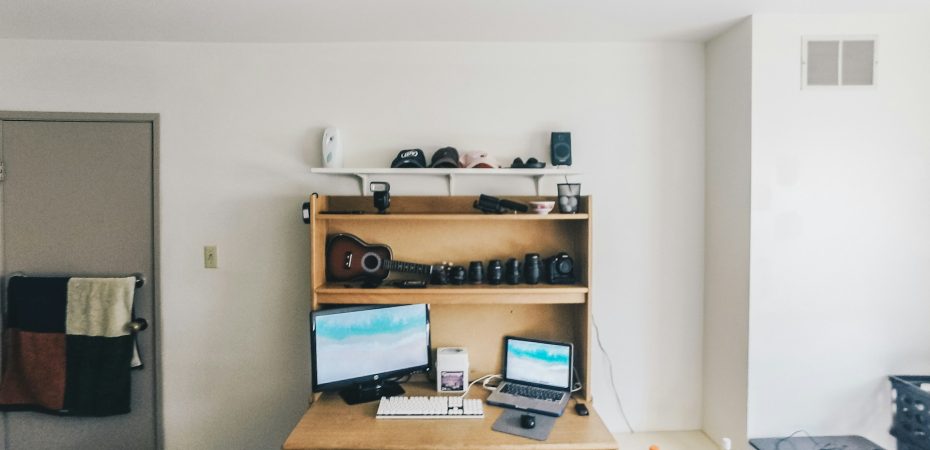
It’s 8 pm on a Tuesday in residence. The floor is quiet. You’ve just gotten back from dinner at Lenny with your friends, and now it’s just you and the low hum of your mini fridge. No one is watching Netflix in the living room, no one is there to scold you for doing nothing around your house, and more importantly, there are no little sisters to bother you when you’re bored. You aren’t sad. In fact, you’re quite happy. Yet, you can’t come to terms with the rather strange feeling that’s slowly been creeping up on you during your usual Instagram doomscroll session. You brush it off as homesickness, yet you can’t help but wonder if that’s really the case.
The funny thing about periodic loneliness is that it’s rarely personal, attracting students in high numbers. Back in 2016, a CBC report found that nearly 70% of students said they battled loneliness during the school year. Granted, this was before the pandemic lockdowns and the rise of TikTok; however, that feeling still hasn’t gone anywhere. With more recent surveys finding that nearly one in three post-secondary students report feeling lonely, it’s clear that the silent hum of mini fridges are persistently louder than ever. Yet, if there’s a solution to that quiet kind of loneliness, it isn’t a better mini fridge; it’s changing the narrative.
Perhaps loneliness is the body telling us it’s tired—tired of the small talks on the way to class, the polite nods, and the waves that sadly didn’t land. In all seriousness, the harsh reality is that most of us are overstimulated without realizing it. A 2021 study by Frontiers in Psychology found that time spent alone, even when it isn’t planned, can lower emotional “noise” in the brain, relieving anxiety and frustration. While this sudden wave of alone time may feel like a void, it scientifically is not. The same study shows that taking a step away from the adrenaline of interaction, the self-consciousness of performance, and the urge to always respond to others gives the brain space to rest. Amongst the quiet is when we begin to understand ourselves better and find solitude. This type of loneliness isn’t depression—it’s depletion, a genjutsu that fools you into thinking you need someone else, when really the person you’ve been missing is yourself.
University was never supposed to be a place of comfort; beyond all the essays and equations, it is meant to teach other things, such as how to be alone without falling apart. Of course, not everyone sees it that way. For most people loneliness is something to fix—a glitch that shouldn’t exist if you’re doing things “right”. We’re constantly told that a full schedule equals a full life, that having plans means having purpose, but that’s exactly it. What we are experiencing isn’t a flaw in the system; it’s the body asking for a refund, in the form of solitude. Those moments of solitude where ideas form, dots connect, and thoughts spiral are meant to be chased.
While it may be a tricky feeling to navigate, those fleeting glimpses of loneliness during the week don’t make us social rejects; they’re proof we’re social survivors.
Image Citation: Fontano, J. (2017, September 2). Brown Wooden Desk with Computer Set [Photograph]. Unsplash. unsplash.com/photos/brown-wooden-desk-with-computer-set-QZQPRCG0NNk.
References:
Beaudette, T. (2016, September 9). Nearly 70% of University Students Battle Loneliness during School Year, Survey Says. CBC. www.cbc.ca/news/canada/manitoba/university-loneliness-back-to-school-1.3753653.
Nguyen, T., Ryan, R. & Deci, E. (2017, October 26). Solitude as an Approach to Affective Self-Regulation. Personality and Social Psychology Bulletin, vol. 44, no. 1, pp. 92–106, https://doi.org/10.1177/0146167217733073.
Weinstein, Netta, Nguyen, T. & Hansen, H. (2021, November 1). What Time Alone Offers: Narratives of Solitude from Adolescence to Older Adulthood. Frontiers in Psychology, vol. 12, https://doi.org/10.3389/fpsyg.2021.714518.