
By: Joey Weisenberg
Edited by: Madeleine Hamilton
When students across Canada cast ballots in April’s national Student Vote—a mock election mirroring the real one—the results caught plenty of attention. While outcomes varied by region, the Conservatives performed somewhat better among students than expected, showing a modest but notable lean to the right compared to previous years.
The Student Vote program, organized by CIVIX Canada, gives students under 18 a chance to learn about elections by holding one of their own. It has been held every federal election since 2003. Nearly a million students from thousands of schools participated this time, making it one of the largest student-led democratic exercises in the country.
Traditionally, student votes have tended to mirror or even lean slightly more progressive than the national results. This year’s mock ballots suggested something different. Though not a landslide, the Conservative Party’s stronger showing contrasted with past trends where younger participants consistently favoured centre-left options.
This change echoes broader polling data collected during the campaign. Several national surveys indicated that younger Canadians, particularly those in their late teens and twenties, were showing more openness to Conservative messaging than in recent memory. Analysts point to housing affordability, inflation, and job insecurity as possible reasons. Economic frustration, they suggest, is reshaping how young voters think about politics.
Still, it’s not a one-directional shift. Many young Canadians continue to prioritize issues like climate change, social equality, and healthcare access—traditionally strong points for progressive parties. What’s emerging seems less like a wave and more like a rebalancing: younger voters weighing economic concerns more heavily than before, without abandoning their social priorities.
Interestingly, in certain ridings during the actual election, older voters leaned more toward the Liberal party, however, President Donald Trump and the economic pressures on Canadian industries appeared to be a dominating concern in this particular election, so it is hard to say whether this trend would continue or not. The important takeaway is that, at least in April’s results, the familiar pattern, older voters conservative, younger voters progressive, appeared to blur.
Regional variation remains strong. Urban schools and ridings often favoured Liberal or NDP candidates, while suburban and rural areas leaned Conservative. That diversity reinforces the idea that no single trend defines youth voting; geography, community priorities, and community issues still hold significant weight. Further, this tends to hold true throughout a voter’s lifetime.
For educators, the Student Vote remains first and foremost a learning tool. Its value lies less in predicting elections than in showing that young people are paying attention, and that their concerns may differ from what adults assume. Furthermore, considering the historically low voter turnout for young people, it is important for getting them to engage in this civic process. At the end of the day, the CIVIX mock election can be seen as a snapshot of how the next generation is engaging with the issues they see every day.
Looking ahead, these results raise interesting questions for Canada’s political future. If young people continue to consider conservative economic ideas alongside progressive social ones, parties may have to rethink how they connect across generational lines. Whether this represents a long-term realignment or just a temporary response to American economic pressure is still unclear, but either way, it’s a trend worth watching.
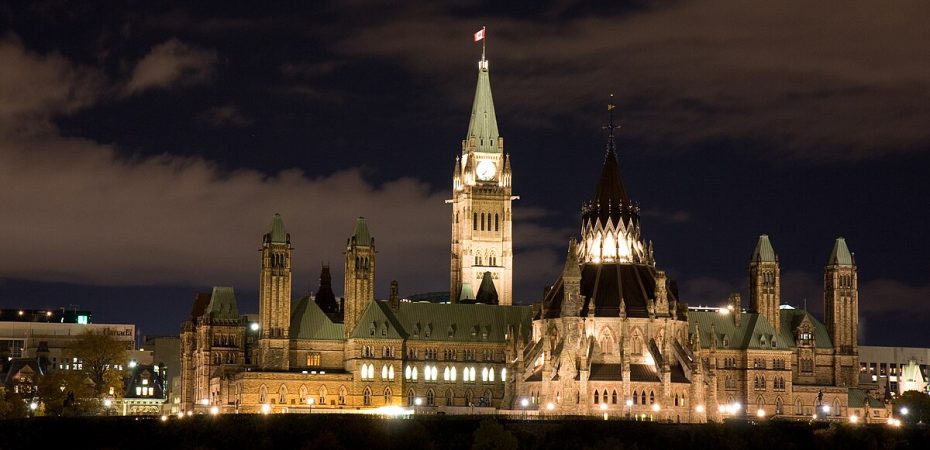
Image Citation: Anderson, Y. (2009). Ottawa – On – Parliament Buildings National Historic Site of Canada – Night. Wikimedia Commons. https://commons.wikimedia.org/wiki/File:Ottawa_-_On_-_Parliament_Buildings_National_Historic_Site_of_Canada_-_Night.jpg

References:
Aguilar, B. (April 13, 2025). Here’s Why Young Voters Could Tip the Federal Election. CTV News. https://www.ctvnews.ca/federal-election-2025/article/heres-why-young-voters-could-tip-the-federal-election/.
Boynton, S. (2025). Canada Election Results & Demographics Exit Polls. Global News. https://globalnews.ca/news/11153872/canada-election-results-demographics-exit-polls/.
Coletto, D. (2025, April 27). Our Final Poll of the Campaign. Abacus Data. https://abacusdata.ca/2025-federal-election-final-poll-of-campaign/.
Lone, W., & Oo, K. (2025, April 26). Young Canadians Favor Conservatives in Election Despite Trump Threat. Reuters. https://www.reuters.com/world/americas/young-canadians-favor-conservatives-election-despite-trump-threat-2025-04-26/.
Lusson, E., Gosselin, G., & Dewing, M. (2023, February 16). Youth Voter Turnout in Canada. Library of Parliament. https://bdp.parl.ca/sites/PublicWebsite/default/en_CA/ResearchPublications/2016104E#notes.
The Results. (2025). Student Vote Canada. https://studentvote.ca/canada/the-results/.