
By: Owen Hills
Edited by: Leo Kristal-Polci
The AI bubble has been a hot topic in the news over the last two years. With the huge popularization of ChatGPT and other AI tools, large amounts of money have been put into AI and tech stocks. The term bubble has become a commonly thrown around and convoluted buzzword at this point. In this article, I will explain what an economic bubble is and provide two different perspectives on the current AI stock predicament. An economic bubble is a financial phenomenon most have a vague understanding of in theory, but often miss in practice. It occurs when the price of an asset, whether tulip bulbs in the 1600s or internet stocks in the 1990s, inflates rapidly to levels far beyond its intrinsic value, driven by speculative frenzy or “hype.” Bubbles forming have a common pattern: a new technology gains popularity through news and social media, capital floods in from investors trying to capitalize on the technology’s popularity, the value of the technology skyrockets, and investors become very optimistic. Eventually, people realize they are in over their heads, causing massive panic selling, crashing the value of the commodity or stocks, leading to the loss of a lot of money.
The rapid expansion of artificial intelligence has opened a fiery debate over whether AI stocks are the next example of such a bubble. Since the explosive debut of generative AI tools like ChatGPT in late 2022, trillions of dollars in market value have been created. Tech giants like Nvidia have seen their valuations soar, and venture capital has poured into a new generation of AI startups at a breathtaking pace. This excitement has split the financial and tech worlds into two distinct camps: those who see the signs of past crashes and those who believe AI is a once-in-a-generation technological boom.
The Warning Sirens: Echoes of Previous Crashes
For the skeptics, the current AI boom bears all the hallmarks of a classic bubble. They point to high stock values inconsistent with the lackluster revenues actually coming into many AI firms. Skeptics argue that all the investment is not based off of real profits, it’s based on companies promising the world, when it is unlikely they will be able to create the profit they promise they will.
Paul Krugman, an American economist and former economics professor at Princeton University, warns, “There are some clear similarities between the 90s tech bubble and recent AI fever.” The Dot-Com Bubble was a stock market crash caused by the overinflation of stocks tied to internet-based companies in the early 2000s. Companies claimed that the internet would make them large amounts of money too early into its life, and once investors realized the companies over promised, markets crashed.
One concerning similarity the Dot-Com and AI bubbles seem to share is the so-called “Halo Effect”. In the Dot-Com bubble, companies’ stocks would skyrocket by simply making a website or claiming that they were planning on using internet services. The same phenomenon appears to be happening with AI: swaths of companies are clumsily including AI into their product and getting rewarded for it. Nils Pratley, a financial technology expert with The Guardian, writes, “ The impossibility lies in knowing the speed of adoption, and which lumps of capital will earn extraordinary returns and which will end up getting torched.” Pratley is cautioning of the “Halo Effect” when he refers to the speed of adoption.
AI is still in its infancy, but it seems every company has included AI into their product or business in some way. That fact is a classic warning of a bubble, and as Pratley thinks, people’s money risks “getting torched.”
The AI Optimist Case: “This Time, It’s Different”
On the other side of the debate, tech optimists argue that the AI surge is fundamentally different from past manias. Their position is rooted not in speculation, but in tangible productivity gains. They contend that unlike many dot-com companies that burned cash with no path to profit, AI is already demonstrating real economic value.
Proponents point to the rapid integration of AI tools across diverse sectors, from accelerating drug discovery in pharmaceuticals to optimizing logistics in manufacturing. While skeptics view the wide adoption of AI as a concern, tech experts like Kai Fu Lee believe it could snowball into a massive productivity increase, as “more data leads to better AI, more automation leads to greater efficiency, more usage leads to reduced cost, and more free time leads to greater productivity.” In other words, Lee is saying that AI companies will be able to justify their valuations because productivity boosts that are already being noticed allow companies to cut costs, and companies will be willing to pay for something that cuts costs.
AI supporters do have a strong point here. The use of AI among workers, students, and companies is already widespread. If something is popular and boosts productivity in its infancy, then it stands to reason that as it develops further, its revenue potential should only grow.
A Verdict in Waiting
The question of whether the AI boom is a bubble remains up for debate. Pessimists see an over-inflated market that is falling for the same tricks as the dot-com companies of the 2000s, while optimists see a technological shift whose biggest winners will continue to grow for decades. The ultimate judgment will not come from pundits or headlines, but from the cold, hard data of quarterly earnings reports and global productivity metrics over the coming years. One thing is certain: the debate itself underscores the immense stakes of a technology that promises, or threatens, to redefine our economic future.
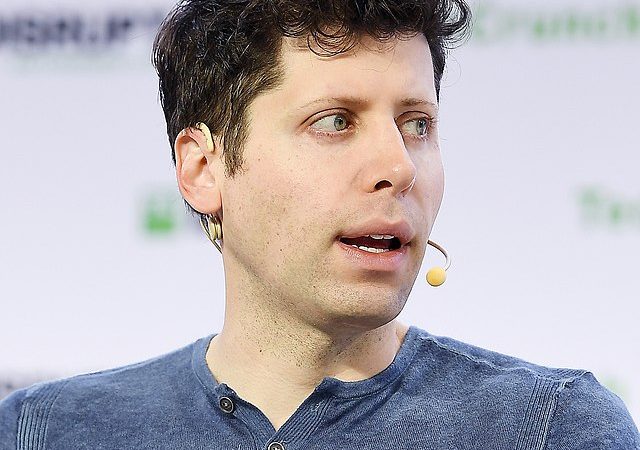
Image Citation: TechCrunch. (2019). Sam Altman [Photograph]. Wiki Commons. https://commons.wikimedia.org/w/index.php?search=sam+altman&title=Special%3AMediaSearch&type=image.
References:
Kenton, Will. “Understanding Economic Bubbles: How They Form and Burst, with Examples.” Investopedia, 2025. https://www.investopedia.com/terms/b/bubble.asp.
Krugman, P. (2025, February 5). Have We Been Partying Like It’s 1999? Paul Krugman (Substack). https://paulkrugman.substack.com/p/have-we-been-partying-like-its-1999.
Lee, K. (2021). AI 2041: Ten Visions for Our Future. Penguin.
Pratley, N. (2025, October 8). The AI Valuation Bubble Is Now Getting Silly. The Guardian. www.theguardian.com/technology/nils-pratley-on-finance/2025/oct/08/the-ai-valuation-bubble-is-now-getting-sill
Team, CFI. “Dutch Tulip Bulb Market Bubble.” Corporate Finance Institute, July 19, 2024. https://corporatefinanceinstitute.com/resources/economics/dutch-tulip-bulb-market-bubble/?utm_source=&utm_medium=cpc&utm_campaign=PMax_US&utm_term=&utm_content=&utm_matchtype=&utm_device=c&utm_ad=&cfi_gad_clid=CjwKCAiAwqHIBhAEEiwAx9cTecVu1Yl33irGYriZiS9SxjFTce1F1pmuNh8mHk6Yv5JbyYfVwQi3qxoC_koQAvD_BwE&campaign=PMax_US&adgroupid=&keyword=&device=c&network=x&placement=&adposition=&loc_physical_ms=9000712&loc_interest_ms=&campaignid=21259273099&gad_source=1&gad_campaignid=21255422612&gbraid=0AAAAAoJkId5zjiatDBrd8qMiixeGaYtIa&gclid=CjwKCAiAwqHIBhAEEiwAx9cTecVu1Yl33irGYriZiS9SxjFTce1F1pmuNh8mHk6Yv5JbyYfVwQi3qxoC_koQAvD_BwE.